How do you know whether the business has transferable earnings?
Start by asking whether the shop could pay everyone needed to stay open and still earn a return. Reconcile reported revenue and expenses, price the work performed by the seller and family, apply realistic buyer rent, and identify costs paid by another business. A seller may show positive discretionary earnings because they work sixty hours a week as the only diagnostician and service adviser. If the buyer cannot perform those duties and the replacement cost consumes the earnings, the same number will not support a manager-run price.
Make two cases. One shows results under a reasonable owner-operator role, including how much work the owner must personally perform. The other shows results after funding the staffing your particular buyer needs. Check whether recent losses resulted from a temporary closure, a repair, a departing employee or a continuing lack of demand. A short-term interruption can justify further analysis. A recurring deficit can shift attention toward the assets and premises. Review the valuation hub before concluding a business is worth only its equipment on the strength of one tax return.
What exactly would an asset buyer receive?
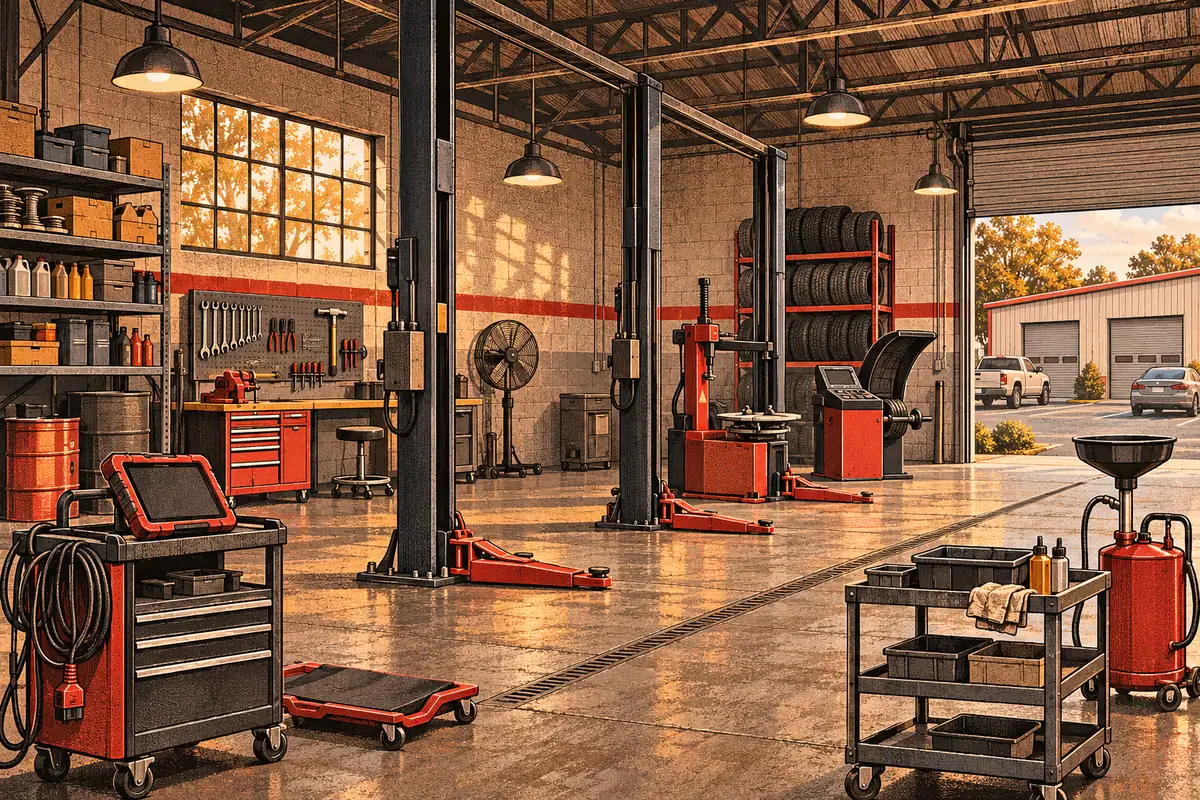
List every tangible and intangible item with its legal owner. Include lifts, alignment hardware, diagnostic devices, compressors, tire machines, office equipment, saleable stock, phone numbers, website accounts, trade name and any transferable customer or contract rights. Identify technician-owned tools, landlord fixtures, leased equipment, vendor-owned displays and inventory held for customers. A person who operates a piece of equipment every day may still lack the right to sell it. Ask counsel to check payoffs, liens, security interests and release documents.
Record whether an asset is worth more installed with the shop open or removed for resale. Shipping a used alignment rack can require disassembly, a qualified installer, a suitable slab, calibration and software activation at another address. A lift attached to the building might be governed by a lease removal clause. Ask the seller and landlord who can remove it and who must repair the floor. Use the equipment inventory schedule for make, serial, ownership, condition and disposition, then attach supporting invoices and inspection evidence.
Which value comparison matches the buyer’s actual plan?
An operator who can occupy the site and use the equipment immediately may compare the offer with the all-in cost and time needed to build a similar facility. A buyer moving equipment to another shop will care about resale prices net of removal, freight and installation. A seller closing quickly may face a shorter marketing period and auction expenses. Identify the premise behind every number. A new-equipment quote, fair market appraisal, orderly liquidation estimate and auction result answer different questions.
Measure avoided costs carefully. If you would otherwise buy a smaller machine or outsource certain services, the most expensive new replacement is a poor measure of your alternative. If a machine lacks vendor support, the cost of a failed component and a week of missed work can outweigh its low purchase price. Ask a qualified equipment professional to assess material items and define the basis of their opinion. The Automotive Lift Institute describes periodic qualified inspections. An inspection can inform safe use and needed repairs while a separate appraisal addresses value.
What affects an asset-focused repair shop offer| Component | Possible benefit | What may reduce it |
|---|
| Installed equipment | Avoided setup and immediate capacity | Unclear title, repairs or expired support |
| Parts and supplies | Usable stock for near-term jobs | Obsolete, customer-owned or nonreturnable items |
| Lease rights | Access to a permitted automotive facility | Consent, renewal or repair obligations |
| Existing demand | Repeat jobs, phone traffic or fleet work | Owner dependence and unverified retention |
When can the lease contribute value?
Compare the proposed occupancy terms with alternative automotive sites you can actually use. Check current rent, operating expense allocations, remaining term, options, permitted services, parking, signage, access, repair covenants, assignment rights and guaranty requirements. A favorable lease with two years remaining and no assignable option has a limited horizon. A landlord might insist on a new market-rate lease, eliminating any assumed benefit from the seller’s old terms. Obtain written terms before building them into an offer.
Test the cost and time to obtain site approvals, install equipment, connect utilities and attract the first work at another property. Some advantages belong to the property itself and benefit the landlord. Others arise only because the buyer can take over particular rights under a lease or local authorization. Ask counsel which rights transfer, and confirm regulatory approvals directly with their issuers. Compare alternatives in the real estate decision tool. The cost of finding a new site can inform a buyer’s willingness to pay while leaving the seller with limited proceeds in a liquidation.
What does a modest in-place offer look like?
Illustrative composite — not a real client. The seller asks $300,000 for a three-bay shop. After funding an adviser role and market rent, the buyer finds no reproducible positive earnings before acquisition financing. A qualified review supports $105,000 for usable, owned equipment under the intended in-place scenario. A count supports $11,000 of eligible inventory. The buyer expects $18,000 of immediate repair and activation cost that the $105,000 figure expressly did not consider. These assumptions give a net $98,000 starting point before other rights, obligations or negotiated considerations.
The landlord offers a new five-year lease at market rent and will allow the equipment to remain. That permission supports the in-place premise, but it does not itself establish another $50,000 of goodwill. An alternative site would require a longer buildout. If the buyer wants to pay more to save time, estimate the contribution actually realizable during those months after staffing and permits are secured. Double-check the estimate against the cost of operating and attracting demand. If the equipment appraisal already reflects existing condition, subtracting the same repair a second time would understate the asset case.
How do you assess residual customer demand or goodwill?
Request monthly customer and repair-order history with identifying details protected as appropriate. Examine repeat visits, customer concentration, deferred work, advertised phone channels, review profile control and the owner’s personal relationships. A buyer can value a working phone number, recognizable trade name or realistic appointment pipeline if those rights transfer and the records support expected contribution. Historical gross sales by themselves cannot establish goodwill when the business loses money after paying necessary costs.
Ask who will answer the calls, diagnose the vehicles and deliver the promised repairs the week after closing. Verify whether major accounts require new vendor enrollment and whether a technician with specialized skills intends to remain through an authorized process. Estimate profitable work the buyer can support from the existing operation. Keep the buyer’s own customer list, better purchasing and new staff as separate improvement cases. If the buyer pays a premium for unusual site access, describe that reason rather than assigning the entire difference to unspecified goodwill.
What should you verify before signing an asset-based offer?
- Reconcile earnings after realistic labor, occupancy and recurring operating costs before dismissing the going-concern case.
- Inspect and inventory owned equipment and saleable stock, and verify material title, condition and release requirements.
- Obtain landlord terms, operating approvals and relevant environmental records for the proposed buyer and use.
- Price repair, removal, installation, activation, opening payroll and working capital under the buyer’s actual plan.
- Match the agreed consideration and excluded obligations to written schedules, purchase-price allocation and closing conditions.
Bring your accountant and counsel the final description of what transfers. IRS Form 8594 rules may apply to a qualifying group of assets acquired as a business. A tax allocation follows applicable rules and facts, and does not determine what the buyer is commercially willing to pay. The closing inventory guide can help both sides reconcile the signed asset list with the physical handover.
When should environmental or lease obligations change your decision?
Ask an environmental professional about documented and historical uses, drains, tanks, waste handling and any unresolved release or corrective action. Have counsel examine lease indemnities and responsibility for preexisting conditions. A quoted cleanup cost might support a specific negotiation, while an unresolved exposure with no defined limit could change whether you want the site at all. Keep environmental and operating assumptions visible before valuing the opportunity to occupy the building.
Which costs arise if you close the doors and sell assets individually?
List storage, security, utilities, insurance, auction fees, rigging, freight, floor repair and the rent due while you wait for a sale. Ask who can enter the premises to inspect or collect equipment and whether the landlord wants fixtures left in place. Check dates against your lease and any lender deadlines. If you advertise items separately, realistic buyer interest and removal schedules can vary widely. Compare net cash at each date with a firm in-place offer. Your remaining obligations can materially change which path puts more cash in your hands.
How should a seller respond to an asset-only offer?
Ask the buyer to show the premise, owned assets, assumed rent, staffing replacement and costs they deducted. Correct missing evidence and identify any profitable transferable service the buyer omitted. Compare the offer with an alternative in-place operator, a separate equipment sale and the cost of keeping the business open. Your best decision depends on cash actually collectible after obligations, timing and the owner work needed to pursue a different outcome.
What else should you know?
Does a loss-making shop have no value?
A buyer may still find value in owned equipment, usable inventory, customer relationships, operating approvals or access to a suitable site. Verify which elements transfer and what it costs to use them. Debts, removal costs, weak occupancy rights or environmental obligations can reduce what the seller can realize.
Can I value used lifts at replacement cost?
Replacement cost can inform a buyer’s alternative, but used equipment value depends on condition, inspection, ownership, age, remaining support and whether it stays installed. Include removal, transport, installation and commissioning if relocation is necessary. Obtain appropriate independent inspection and valuation for equipment material to the offer.
Does a below-market lease automatically have value?
Verify the signed terms, remaining duration, rent and expense structure, assignment rights, renewal options and required landlord consent. A buyer must also be able to use the premises for the intended work. Below-market rent can have value when the buyer can actually retain the benefit and meet the obligations.
What if a strategic buyer can turn the shop around?
Separate earnings the current business can transfer from improvements that require the buyer’s own staff, customers, capital or systems. Quantify the buyer’s alternative cost of entering the location and the investment needed for a turnaround. Any price above asset support should have a specific commercial reason and explicit assumptions.