What is the specialty actually worth to a buyer?
It is worth the future earnings the buyer can keep after paying for the people, tools, access and customer relationships needed to deliver that service. Start with documented jobs and margins, then identify what makes those earnings repeatable.
Export completed work by job family for a stated period. Group work by what the shop did rather than relying only on a vehicle badge or customer name. A European shop can earn most of its margin on general maintenance. A diesel shop can earn fleet revenue from brakes and inspections as well as engine diagnostics. A transmission rebuilder may sell retail installations, wholesale bench units and outsourced services under different terms. Break those streams apart before discussing a single specialty premium.
For each stream, list net sales, parts and sublet cost, attributable labor, warranty work and unusual discounts. Ask how the system records technician cost and warranty time so those costs do not disappear during the analysis. A buyer should be able to see which jobs drive gross profit and which merely swell revenue. Preserve the invoice and payroll records supporting the classification under the same principles used for your other transaction records.
What evidence distinguishes the four specialties?
Match each buyer concern with the operating records that answer it. A general data room can cover the books and lease, but it will not explain a deferred core credit or an expired coding subscription.
Evidence to assemble before marketing a specialty repair business| Specialty | Main question | Evidence for review |
|---|
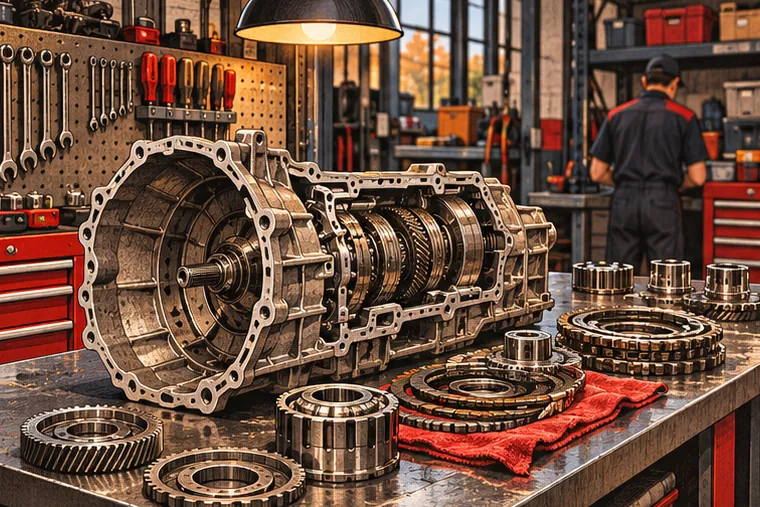
| Transmission | Who can diagnose, build and honor the warranty? | Rebuild tickets, supplier invoices, core records, comeback history and a technician skills map |
| European | Will diagnostics, programming and pricing survive? | Realized labor rate by service, subscription terms, tooling inventory and qualified coverage |
| Diesel | Which vehicles and jobs can this facility actually support? | Lift capacities, door clearance, service mix, technician qualifications and sublet logs |
| Fleet | Will customer work and cash collections continue? | Account terms, authorization paths, aging history, pricing schedules and direct-cost margins |
Where your shop spans categories, avoid counting the same invoice twice. A fleet diesel transmission job can be tagged across service, customer and technician dimensions, but it contributes once to total sales. Keep the transaction ID and document which dimension answers the particular question. The SMS report request checklist can help separate the operational export from the final presentation.
What does a transmission buyer need to see?
Show the economics of the whole rebuild cycle, including diagnostic time, teardown, parts and cores, warranty labor and any future claim. A strong invoice total can conceal the cost of a unit that returns after delivery.
Pick a completed rebuild and trace the original estimate, authorization, parts and sublet purchases, direct labor, return of the core and the final payment. If the vehicle came back, link the follow-up ticket to the original repair. Record the date and who absorbed parts, labor, shipping or removal and installation. A supplier may replace a component under warranty while the shop still absorbs hours or towing costs.
At closing, distinguish finished stock, cores with recoverable credits, customer-owned units and work in progress. Count actual units and document title before someone prices them as ordinary inventory. Ask your attorney to record how prior warranty obligations, promised rework and customer deposits will be handled after the sale. Give the buyer a skills matrix showing who diagnoses failures, who rebuilds and who has authority to approve warranty work. If every difficult teardown ends on your bench, the buyer needs a replacement plan.
How do you prove the strength of a European specialist?
Demonstrate repeatable diagnostic capability and measured labor realization across the actual models and services you handle. Give the buyer evidence of the tools and people behind your reputation.
Ask the software vendors what transfers, what requires a new account and what support is included after ownership changes. A scan tool can be physically present but limited by subscription renewal, security permissions or training. Include the invoice, model, serial number, service plan and renewal date in your equipment and inventory schedule. Record whether technician-owned devices and laptops will remain with their owner.
For each significant service, compare the posted labor rate with net invoiced labor per billed hour. Break out diagnostic time authorized and time actually invoiced. A buyer may see a customer base willing to approve difficult work, or may discover you personally absorb hours to preserve relationships. ASE’s certification series gives a way to describe technical areas. Check the actual credential and recent work, and avoid implying that a technician’s credential provides manufacturer approval or belongs to the business.
What is different about diesel and commercial work?
Your buyer needs to understand vehicle size, equipment limits, job duration and access to specialized labor. A building and crew fitted for light-duty service do not automatically support a heavy vehicle pictured in marketing materials.
List the classes of vehicles you actually service, the bays they can enter and the equipment rated for the work. Check lifts, clearances, parking and insurance against those uses. Identify jobs you regularly send out and how sublet costs flow into invoices. A buyer planning to bring jobs in-house must fund new capacity and prove demand; count that separately from earnings your shop already produces.
Review technical and regulatory coverage by service line. EPA identifies training and certification requirements for technicians performing covered motor vehicle air-conditioning service for compensation. Ask the relevant agencies and advisors which requirements affect your actual work and location. Verify who holds any required qualification and whether that person will remain. Do the same for state inspection authority where applicable. Keep these questions separate from general mechanical skill and from the buyer’s ability to obtain financing.
How do you show the quality of fleet revenue?
Track each material account from signed terms through completed repair orders into cash collection. A recognizable name or a long relationship can help tell the story, but a buyer must test pricing, concentration and transferability.
Illustrative composite — not a real client. Suppose one fleet supplies $300,000 of a shop’s $1.2 million annual sales. That is 25% of revenue. If direct parts, labor and sublets cost $234,000, the account contributes $66,000 gross profit, or 22% of its sales. If collection averages roughly two months, the shop may carry around $50,000 of receivables at a steady monthly sales pace. That is a simplified timing estimate, subject to seasonality and actual billing terms.
Ask who authorizes work, what happens when management changes and whether a purchaser must requalify as a vendor. Compare discounts, return visits, delivery commitments and priority scheduling with retail work. A written agreement without guaranteed minimum volume does not establish future revenue. Keep customer identities controlled until the seller and buyer agree how and when to verify continuing interest. Record any repricing or credit requirements in the buyer’s forecast instead of assuming the past economics continue unchanged.
How should you present specialist risk in your sale package?
Give every claimed advantage an operating test and a source record. A buyer can then recognize capabilities that survive closing and identify concrete remedies for the parts that remain dependent on you.
- Pick the services that contribute the most gross profit. Produce a ticket-level bridge showing included sales, direct costs and how warranties or sublets were treated.
- Show who performed and supervised those jobs. Record secondary coverage and realistic local replacement pay where a role rests on one person.
- Verify the equipment, subscription rights, facility suitability and credentials needed to repeat the work. Mark any transfer or renewal that requires written approval.
- Identify customer and referral dependence. Present redacted account terms and retention history before arranging sensitive conversations.
- Model downside by removing gross profit that may actually be lost and adding costs that must continue. Keep one-time transition spending separate from recurring expense.
Use the owner-technician impact calculator for concentrated diagnostic labor. Compare the resulting business with similar transactions. BizBuySell’s broad service category includes multiple specialties and can frame a discussion, but it does not prove an automatic price adjustment for your niche. The selling hub outlines how to move from preparation to controlled buyer review.
How do you handle work referred by other shops?
Measure referral volume separately from direct retail and contracted fleet work. A neighboring shop that sends you difficult diagnostics may rely on your personal relationship, your promise to return the customer or your unusual capability with a specific tool.
Identify the referring business with an anonymous code, match referred orders to cash and record who handles follow-up with the original service writer. Test whether another member of your team has completed referred work without you and whether the referring shop continued to send similar jobs afterward. Agree on permission and timing before a buyer asks for references. A list of referring businesses by itself cannot demonstrate transferable demand.
What other questions come up with specialty shops?
What if only your lead has a critical skill? Build a second qualified path and observe it on a representative job. The Bay-to-Buyer Readiness Check helps you document where the workflow stopped.
Can a technician roster prove retention? It can identify tenure, pay, role and production. Use the technician roster and pay-plan tracker alongside a confidential plan for conversations and clear post-close responsibilities.
What else should you know?
Does my European specialty shop deserve a premium?
A buyer needs evidence that realized rates, margins, technical coverage and customer retention will continue under new ownership. A high posted rate or a premium vehicle mix alone does not establish transferable earnings. Show completed tickets, recurring subscriptions, technician coverage and a realistic cost to maintain the capability.
How do I show the value of transmission rebuild work in progress?
List each job’s authorization, parts committed, stage of completion, deposit, expected remaining cost and warranty responsibilities. Agree how the buyer and seller divide cash and future obligations at the cutoff. A rebuilt unit on the floor may represent inventory, customer property or a partially completed job.
Can I share my fleet contact list with every prospective buyer?
Use anonymized account-level revenue and margin first, under the agreed confidentiality process. Review contract restrictions and obtain seller approval before customer contact. At the appropriate stage, verify assignment, pricing authority and credit terms directly with authorized parties without treating introductions as guarantees of future work.
Are specialist certifications enough to prove the shop can continue?
Review the credential, holder, scope and expiration with the appropriate issuer. Then verify equipment, software subscriptions, permissions and actual experience with the services in your forecast. A credential attached to a departing technician does not automatically move to the buyer or establish coverage across all shifts.