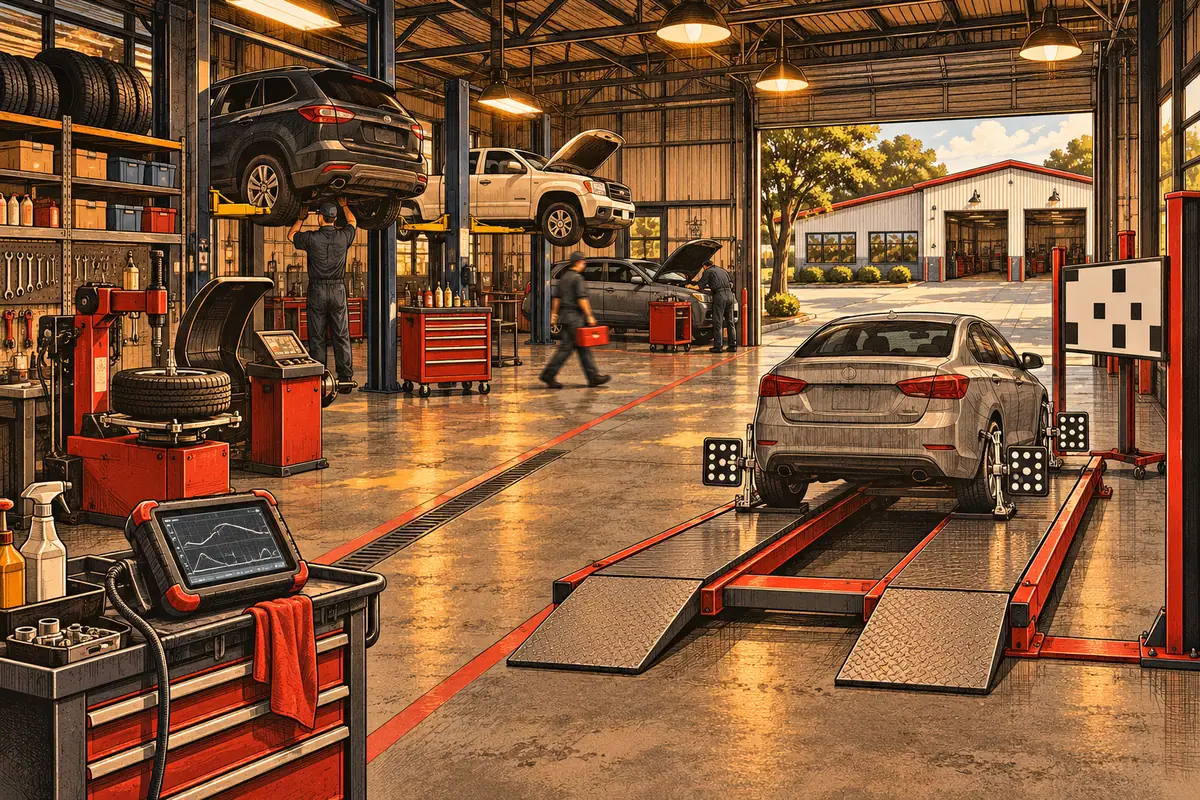
Which equipment deserves your attention first?
Start with the jobs that pay the bills. Request the past twelve months of repair orders by service and ask the shop foreman which lift, alignment system, scan device, tire machine or calibration station handles each major category. Record a backup option and how long it would take to use. A modest specialty adapter that fits the shop’s most common fleet vans can deserve an earlier inspection than an expensive rack that sees two jobs a month. Follow the vehicle from check-in to delivery to find shared bottlenecks.
Then walk each bay with the equipment inventory schedule. Record the make, model, serial number, location, claimed owner, last service and visible condition. Photograph the identification plate with permission. Ask staff to identify technician-owned tools, loaned machines and items assigned to leased premises. Keep a column for what you still need to prove. Seeing a tool in use establishes its presence on that day. Ownership, condition, software rights and availability after closing each require their own evidence.
What do lift records tell a buyer?
For each lift, request the manufacturer’s instructions, installed configuration, rated capacity, recent inspection reports, repair invoices and documentation for any open findings. Compare the serial number and physical bay to the inspection report. Ask who inspects the lift and which qualifications they hold. The Automotive Lift Institute describes annual inspections by a qualified inspector under the applicable industry standard. Have a qualified lift professional assess missing records, overdue corrections and suitability for the planned work, including vehicle weight distribution and the accessories in use.
Notice how the shop assigns heavy pickups, long-wheelbase vans and vehicles with unusual lifting points. A nominal capacity number alone cannot resolve whether a particular lift, adapter and vehicle combination works. The buyer should arrange demonstrations through qualified staff and avoid operating unfamiliar equipment. Ask where the shop sends work when a lift is unavailable, what the substitute bay can accommodate and whether a replacement installation would require floor, power or permitting work. Request an installation quote that includes removal, shipping and downtime. A used-equipment listing rarely includes those costs.
How do you check whether the alignment system can keep earning?
Watch an experienced technician demonstrate a representative job with authorization. Ask which makes, wheelbases, wheel sizes and ride heights fit the rack. Confirm measurement hardware, turn plates, slip plates, clamps, steering and brake fixtures, current software and installation records. Inspect recent service tickets for recurring faults and determine whether service is still available for the model. Ask how the shop handles modifications or inaccessible specifications. Record the reason declined jobs could not be completed and who receives those referrals.
Request a sample of alignment invoices and their related repair orders. Remove subcontracted alignments and repeat checks performed without a second charge before forecasting billed work. Count how many alignments follow tire or suspension jobs, and how much other revenue might move if local turnaround becomes slower. A shop capable of selling forty alignments during a busy month may have billed far fewer in winter. The bay utilization tool can model the effect of losing a bay when its inputs reflect the shop’s staffed schedule.
What does the scanner demonstration actually establish?
A successful connection with a single vehicle establishes a narrow fact. Ask which device performs generic diagnostics, manufacturer-level functions, programming or security-related work on the makes most common in the repair history. Identify hardware identifiers, owners, compatible interfaces, manufacturer portals, subscriptions, account administrators and chargeable tokens where applicable. Have the seller show anonymized invoices for the services it claims to offer. Document when an outside mobile specialist is called and how the shop records the specialist’s invoice.
Evidence to request for revenue-producing equipment| Asset | Operating evidence | Transfer question |
|---|
| Vehicle lift | Inspection, correction records and vehicle fit | Who owns the lift and any installed accessories? |
| Alignment system | Recent billed jobs, service report and software status | Will support and database access continue? |
| Diagnostic device | Functions demonstrated on common vehicle makes | Must the buyer obtain a new account? |
| ADAS equipment | Vehicle-specific procedure and documented completion | Which fixtures, credentials and software stay available? |
Avoid requesting anyone’s personal password. Ask the provider to confirm account setup, approved access and effective dates. Budget for an overlap period or outsourced jobs if the buyer cannot obtain new access by the planned handover.
Can the shop substantiate its ADAS calibration claims?
Separate scanning, identifying a required calibration, performing the calibration and documenting the completed procedure. Ask for sampled repair orders with the specific vehicle, service event, manufacturer procedure consulted, equipment used and disposition. I-CAR’s OEM calibration requirements search helps you locate information by manufacturer, vehicle and system. Use current vehicle-maker procedures and qualified staff for the actual decision. Determine whether the documented work happened on-site or arrived from a subcontractor whose report was attached to the order.
Walk the space with an experienced calibration provider. Depending on the vehicle and procedure, controlled space, floor conditions, target positioning, lighting or driving conditions may matter. Obtain estimates for limitations that would prevent planned jobs. A shop might own targets for its busiest make while outsourcing other vehicles to a nearby collision center. That arrangement can be economically sound if pricing, liability, documentation and scheduling remain available to the buyer. Ask the outside provider what new-account arrangements and turnaround commitments it can offer before promising customers continued service.
How would a costly equipment surprise change the offer?
Illustrative composite — not a real client. A buyer sees $108,000 of annual alignment sales and expects to retain the unit. An independent service inspection identifies an unsupported component, and a replacement installed system costs $46,000. The buyer expects a twelve-workday installation interruption. The shop normally completes four billed alignments a day, contributing $55 apiece after variable cost. If every job disappeared, the contribution at risk would be $2,640, plus any actual spillover into other work. Gross sales lost would answer a different question.
A nearby shop can take half the displaced jobs at a smaller contribution, and the installer offers off-hours removal for an additional fee. Price both alternatives using written terms. Compare cash at closing, prepaid deposits, reduced contribution and financing cost without counting the same loss twice. Decide whether the seller will complete the replacement before closing, provide a defined credit, or deliver the equipment as inspected at a revised price. A closing credit should identify the condition it resolves and the evidence supporting the amount. Bring the issue into the full buyer review alongside other commitments.
How do you turn the walk-through into closing evidence?
- Freeze a dated equipment list and mark leased assets, personally owned tools, landlord fixtures and items scheduled for removal.
- Match material items to purchase or lease records, serial numbers and the service lines that rely on them.
- Give qualified inspectors access with seller permission. Collect the written scope, limitations, findings and installed-cost estimates.
- Ask software and service providers to confirm new-account requirements, transfer costs, subscriptions and first available onboarding dates.
- Reconcile the final schedule to the purchase agreement, proposed price allocation, evidence of releases and the handover inventory.
Repeat the walk-through shortly before funds are released. Photograph any replacement or missing item, note its serial number and ask counsel how the agreed documents handle substitutions. Require a specific handover for keys, manuals, software administrator setup and outstanding service tickets. The buyer diligence request list helps track requests that belong with the landlord, equipment lender or software provider.
When is a third-party inspection worth obtaining?
Consider the cash and time exposed if the asset fails. An inspection can be valuable when condition determines safe use, the manufacturer has stopped supporting a model, the equipment serves a large share of orders or repair would interrupt the only suitable bay. Ask the inspector to state the scope and what the inspection leaves unresolved. Share the actual intended vehicle mix and space conditions. An appraisal of value addresses a different question from a mechanical or safety inspection.
Can you afford to wait for a replacement?
Use your shop calendar to trace a real breakdown scenario. If your one suitable truck lift stays out for two weeks, ask your lead which booked vehicles can move to another bay. Have your adviser mark the vehicles you could reschedule, the work you would refer and the jobs you expect to lose. Ask your installer when the replacement can be commissioned at your address. Then check whether your insurance or warranty has a waiting period, deductible or documentation requirement. Run those figures through your opening cash forecast. Keep the deposit you owe the supplier on its actual due date so you can see whether you have enough cash before the equipment starts producing.
What should employees demonstrate at the handover?
Ask the incoming lead to observe authorized staff locating current instructions, securing the right adapters, accessing support, retrieving recent service records and escalating a fault. Record who knows how to handle each frequent service and who can cover an absence. If only the seller can use an essential system, negotiate training with a defined objective, time limit and demonstration of completion. A practical handover connects each machine to a person and a supported process the buyer can sustain after the seller leaves.