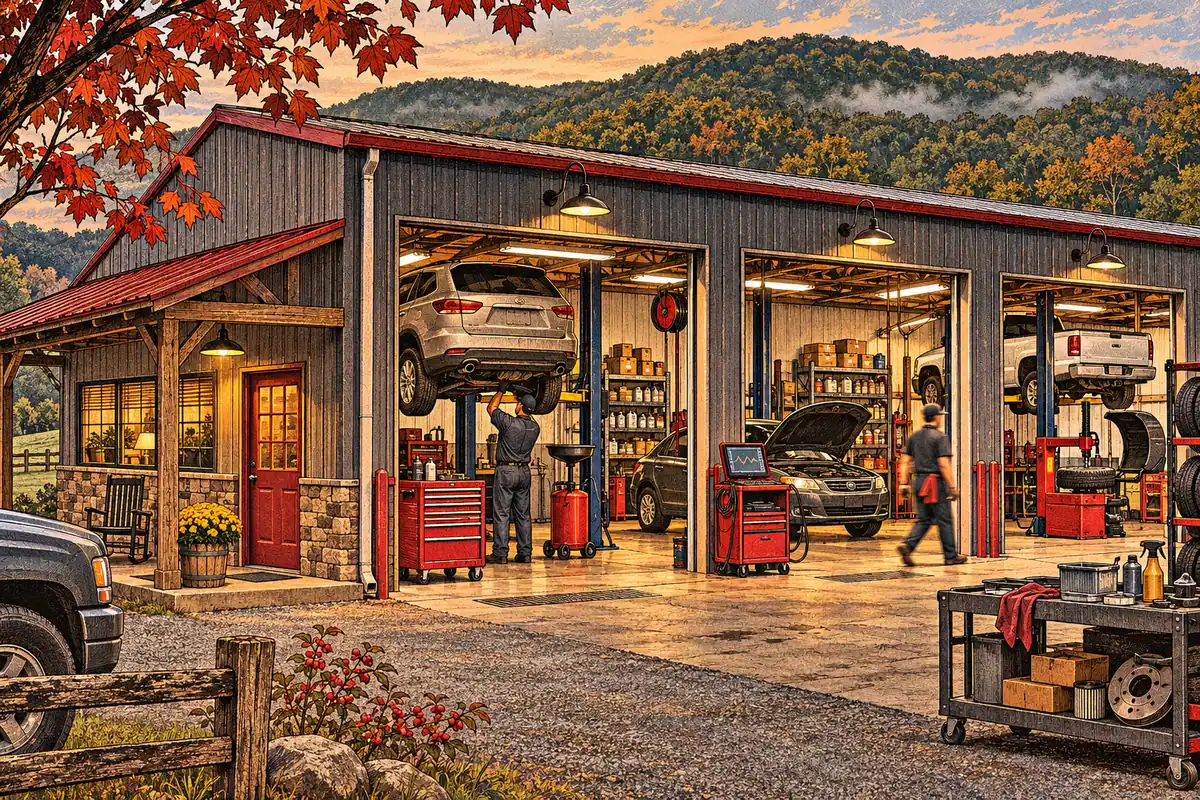
What can a row of parked cars tell you about Tennessee earnings?
Walk the parking area before you read the seller’s list of receivables. A car by the fence may be waiting for an insurer, an unavailable component, a customer who declined extra work or a lien proceeding. Ask the service adviser to identify the owner, work performed, amount due and next planned contact for each aged vehicle. Reconcile the answers to the management system. A vehicle physically occupying space is a carrying cost. Any potential recovery depends on evidence and a lawful process. Your opening balance sheet needs separate entries for collectible customer invoices, incomplete work and disputes.
Look at ordinary pickup behavior alongside the aged tickets. A Rutherford County commuter may arrange an evening pickup while a contractor sends vans in pairs so one driver can get back to work. Measure actual time between completion, payment and removal by customer group. Parking and overnight key controls can constrain output before a technician runs out of available hours. If your buyer plans to add fleet work, ask a dispatcher whether vehicles can enter and turn safely at morning handoff. Verify that a neighboring lot the seller uses informally will still be available to you after closing.
Tennessee repair shop transaction rules and evidence| Issue | What to check | Primary source |
|---|
| Repair notice | Check how the shop notifies customers of estimate rights before repairs and retains a record for oral notice. Review applications and statutory exceptions with counsel. | Tennessee General Assembly |
|---|
| Stored vehicles | Trace repair authority, current ownership, fees, elapsed time, notices and lien procedure. Confirm with counsel whether the seller has collectible rights for each vehicle. | Tennessee Department of Revenue via county clerk |
|---|
| Emissions revenue | Davidson County residents no longer need the former emissions check to register a vehicle. Examine paid diagnosis and repairs separately from historical program income. | Metropolitan Nashville and Davidson County Council |
|---|
| Sales tax | Ordinary car repair labor is subject to Tennessee sales tax. Recalculate representative transactions including parts, customer-paid labor, warranty contributions and documented exemptions. | Tennessee Department of Revenue regulation via Cornell Legal Information Institute |
|---|
| Waste activity | Determine which used-oil role applies to the facility and which registration or notification is required. Include waste generated at the premises and any third-party oil. | Tennessee environmental regulation via Cornell LII |
|---|
| Buyer footprint | Tire Discounters lists a West Town Mall location in Knoxville. Compare its services and customer access with the relevant neighborhood independents. | Tire Discounters |
|---|
How do you test the estimate and lien records together?
Tennessee’s repair notice statute addresses the right to request a written estimate for repairs exceeding $250. It addresses charges exceeding the written estimate by more than 25 percent and the consumer’s consent or a good-faith effort to obtain it. Read the actual provision with counsel, including its coverage, exceptions and the method of providing notice. Ask to see the customer’s selection, the shop’s record if notice was oral and any later communications. A generic printed statement posted somewhere in a waiting room does not establish what happened on the specific transaction you are reviewing.
Choose a repair that grew after disassembly. Start with the initial diagnosis, then identify the new work, revised amount, person contacted and when the technician resumed. A voice-mail timestamp may show an attempted call, but the message and file context matter to the legal analysis. Pull the complete record and give it to counsel for a conclusion tied to the facts. Tennessee law links failure to comply with the notice provision to the shop’s lien rights. If the work order in question is one of the receivables being offered to you, ask how that exposure affects the amount you would pay.
The Department of Revenue describes its garagekeeper’s lien procedure for authorized work or storage followed by nonpayment or failure to claim. Check vehicle identification, title information, required notices and timing before anyone assigns sale proceeds to the business. Ask who would pursue the process after a sale, bear storage costs and handle inquiries from a vehicle owner or secured lender. Negotiate a schedule showing which party owns each claim. For some old vehicles, the most supportable amount in your initial cash forecast may be zero until the claim is resolved and cash actually clears.
Which services can continue under the new operator?
Map the entity, site, use approvals and the people performing each service. Verify state and local business registrations, the lease, applicable municipal use conditions and any specialized certifications with the proper agencies for the address. Distinguish routine mechanical work from collision refinishing, refrigerant handling, for-hire towing or vehicle sales. Request the licenses or contracts supporting any separately earned income. If your offer includes a tow truck, ask whether it serves retail customers, insurance dispatch work or an agreement controlled by an owner’s personal contact. Check which vehicle, insurer and operator names appear in that agreement.
Davidson County’s council voted to end the program; residents no longer needed an emissions test for vehicle registration in February 2022. A seller might still refer to the inspection lane or an old testing neighborhood because customers remember it. Pull a recent list of jobs completed in that space. If the lane now supports alignments, confirm rack condition, alignment calibration, usable vehicle dimensions and technician coverage. If it supports emissions troubleshooting, count paid diagnostic hours and subsequent repairs. Your value estimate should reflect today’s income-producing activity and expenses. Document the operational use of that bay for the landlord, insurer and lender.
How do you reconcile Tennessee’s taxable repair labor?
The state Department of Revenue makes clear that a charge for labor performed on tangible personal property, including a car repair, is taxable. If the seller previously operated across a state line, verify the Tennessee system settings yourself. Pull tickets for parts and labor, labor-only work, a warranty return and an account flagged as tax exempt. Match taxable receipts, output tax and customer payments with the filed report for the month. Record the exemption authority and supporting certificate for any transaction removed from the normal calculation. A customer’s use of a corporate purchasing card provides little evidence about taxability.
Reconcile cash separately from booked revenue. A fleet may pay a consolidated statement covering multiple invoices after a volume adjustment. Compare the credit document with receivables and tax adjustments. Determine whether the seller books warranty recovery at face value before the manufacturer approves payment or nets it against a vendor account. When you rebuild the earnings schedule, strip collected sales tax out of revenue and identify recurring costs associated with actually earning the reported gross margin. Test a debt-service case with the SBA coverage calculator using the buyer’s supportable annual cash flow and the lender’s prospective payment.
What environmental questions follow the activity at this shop?
Tennessee’s used-oil management guidance distinguishes registration and notification by role. Determine if the shop merely generates oil from paid work, accepts oil from the public, transports material or combines oil from multiple facilities. Ask the state environmental agency which filings apply to the actual business. Inspect the storage area with the technician who handles pickups. Match each tank or container to its contents, identify who owns it and examine the route between the bay and collection vehicle. A supplier-owned tank can leave with the seller’s service contract even though it was visible on your property tour.
Look beyond oil to parts washers, solvents, batteries and waste created by body work or cleaning. Obtain the waste determination, hauler agreement and disposal records where appropriate. If a floor drain terminates somewhere the current tenant cannot identify, have a qualified professional investigate with the owner’s consent. Put responsibility for access, testing and any remediation into the agreement with advice from counsel. The environmental diligence worksheet gives you space to distinguish what the current operator can document from what requires a property investigation. Decide how an unresolved issue affects occupancy, insurance and funding before setting a firm closing date.
How could a Tennessee buyer justify an offer and closing date?
The Alliance for Automotive Innovation reports an average vehicle age of 13.4 years in Tennessee on December 31, 2024, using S&P Global Mobility registration data. Download the state figures and original sources.
Tire Discounters operates a West Town Mall service location in Knoxville. Its store listing gives you a real regional operator to compare with the subject shop, including the services offered, customer access and proximity to other established service locations. Compare the subject shop’s service capabilities, proximity to competitors and customer behavior. If a tire program depends on a particular distributor’s volume rebate, obtain written terms that apply to your business and forecast when the rebate is paid. A larger operator may have different purchase costs and a different service radius. Only include cost benefits that are credible for the proposed buyer.
Set the timetable around obligations that affect real customers. Establish which entity will finish jobs already authorized, pay for parts already ordered, collect the invoice and honor any warranty. Agree on who calls the owners of stored vehicles, who retains the repair records and how disputes reach counsel. Try a first-day exercise using an unclaimed vehicle, an ordinary fleet bill and an emission-related diagnosis. If your team can explain each customer’s next step, the tax calculation and who receives the money, you have stronger grounds for funding the transaction and handing over the keys.
- Reconcile the vehicles in storage to open invoices and customer authorization records.
- Verify lien rights and collection timing with your Tennessee attorney.
- Give the incoming adviser a named contact for every car still on the lot.
What else should you know?
When can a Tennessee customer ask for a written repair estimate?
The repair-notice statute provides for notice of the right to request a written estimate for repairs costing more than $250. It also addresses increases over a written estimate. Review the relevant exceptions with counsel and retain the original request, any refusal or waiver and later customer contact records.
Is ordinary car repair labor taxable in Tennessee?
Tennessee’s Department of Revenue specifically identifies car repair labor as taxable. Sample actual repair invoices alongside sales tax reports, especially where the customer furnished parts or a warranty provider paid part of the bill. Ask your CPA to document the treatment and correct any recurring assumptions in the earnings presentation.
Can a buyer treat unclaimed vehicles as inventory?
First identify the owner, repair authorization, debt, timing and documentation for any proposed garagekeeper’s lien. A vehicle left at a shop can belong to a customer, lender or other party. Have counsel check the state procedure and contract allocation before assigning value or arranging a sale.
Does an old Nashville inspection bay still generate testing fees?
Davidson County ended its vehicle registration emissions testing requirement in February 2022. A bay may now support customer-paid diagnostics, tire work or ordinary maintenance. Check recent repair orders, equipment and technician assignments to determine its actual productive use and avoid projecting former registration-related testing charges.