What are you buying when inspection stickers bring customers through the door?
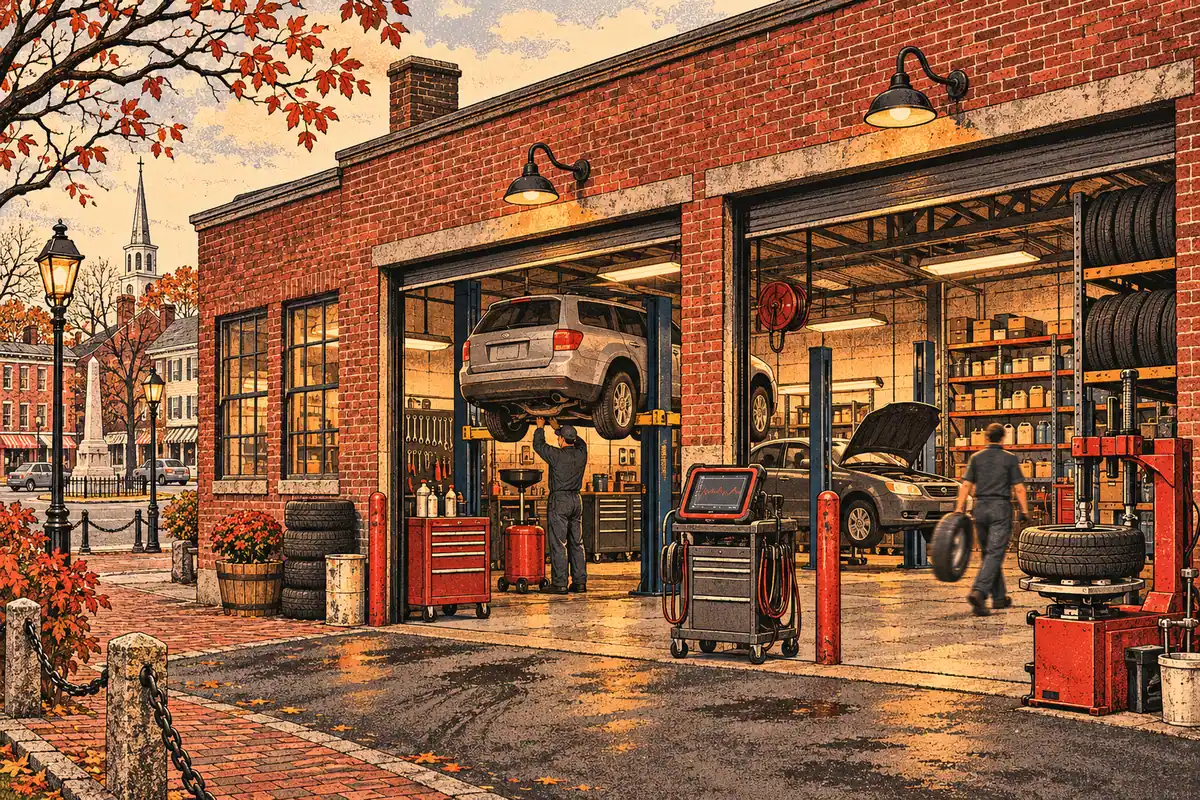
Start with a cold morning in Worcester. An inspector is handling queued vehicles while two mechanics work on paid repairs and another employee swaps seasonal tires. Which of those activities needs the inspection station license, and how would the workday change if inspections paused? Look at each customer’s original reason for visiting. A driver who books a tire change and an inspection together could still return for tires. A driver who arrives only for a sticker may never bring the car back for repairs. Your forecast should distinguish these cases using actual invoices across more than one season.
Follow a representative sample from station records to repair orders, customer permissions and payment. Count paid follow-on work once. If a winter tire swap was booked before the inspection, avoid attributing its revenue to inspection-driven conversion. Look at rejections, return visits and assigned technicians. Use registration geography and appointment times to see whether your shop attracts local customers or commuters stopping near work. This creates a defensible estimate of the appointments and gross profit at risk in the first weeks after an acquisition. It also shows which relationships the seller can help preserve with a planned introduction.
Massachusetts repair shop transaction rules and evidence| Issue | What to check | Primary source |
|---|
| Damage repair | The Division of Standards registration covers repair of damage from specified causes; auto body and glass work have distinct registrations. Classify the shop’s actual billed operations. | Massachusetts Office of Consumer Affairs |
|---|
| Station licensing | An inspection station license does not transfer with the business. The Registry’s published policy calls for immediate written notice and a replacement application for an ownership change. | Massachusetts Registry of Motor Vehicles |
|---|
| Inspection work | Review the vehicles served, appointment mix, lane equipment and qualified inspectors. Separate the state inspection from discretionary work subsequently authorized by the customer. | Commonwealth of Massachusetts |
|---|
| Customer bill and tax | Ask your CPA to test separately identified parts and service charges, including bundled operations. Review balancing materials and supplies against the facts in the tax authority’s guidance. | Massachusetts Department of Revenue |
|---|
| Waste oil | Massachusetts regulates waste oil as hazardous waste. Inspect accumulation, labels, generator status, pickup records and any heating practice involving recovered oil. | Massachusetts Department of Environmental Protection |
|---|
| Regional operator | Sullivan Tire bought retail and wholesale operations of C&R Tire in Worcester and Sturbridge. Review how each channel contributes to earnings at your facility. | Sullivan Tire and Auto Service |
|---|
The Registry of Motor Vehicles states inspection station licenses cannot be transferred or sold. Its station policy requires immediate written notice for a change in ownership, location or interest, and requires a new owner to apply with supporting evidence. Its published instructions discuss a 90-day period for receiving the application after an executed ownership change. That filing window does not authorize you to inspect while an application is pending. Ask the Registry which steps it can evaluate in advance, who may sign them and what written evidence will establish authority for the new operator on the first planned inspection date.
Make a second list for the people and equipment. Verify each inspector’s credentials, hours, planned retention and training for the applicable services. Ask who owns the workstation and analyzer, who maintains them and how accounts are assigned. The Registry policy also addresses exclusive control of the station premises. If a seller plans to retain an adjoining body operation or sublet a corner of the facility, share the proposed floor plan with the Registry and landlord. A workable legal structure on paper may still fail the requirements for an actual inspection lane with controlled space and access.
Massachusetts consumer guidance describes motor vehicle damage repair registration for repairs arising from events such as collision, theft, vandalism or fire. The state distinguishes body repair from routine mechanical work and describes a separate glass registration. Look beyond the storefront name. Sample work orders assigned to an insurer, outsourced sensor calibration, glass replacement and a routine steering repair. Identify who contracted with the customer and who performed the job. Ask the Division of Standards and local licensing authorities which registrations and local approvals your actual entity, address and proposed services require. Document the answer before underwriting an expanded service menu.
The consumer guide explains Massachusetts written estimate requirements and exceptions. It also describes customer permission when additional repairs are needed or the authorized repairs will exceed the original estimate by more than $10. Reperform one case where the shop discovered corrosion only after removing a component. Look for the first approved amount, the revised work, customer contact and time of authorization. Ask for the record behind any waiver or exception. Check signs and invoices for estimate, diagnostics and storage policies where applicable. A manager’s verbal description can guide your search, but the customer’s own transaction establishes the facts.
How should you calculate taxable parts and winter inventory?
Massachusetts Department of Revenue guidance addresses customer bills that separately state service and parts. It explains collection on separately stated parts in the circumstances discussed and analyzes bundled charges such as balancing with wheel weights. Sample an installed tire, a balancing-only service, a warranty return and a customer-supplied part. Your tax adviser should determine what treatment applies to each, including materials consumed in the service, separately transferred items and bundled transactions. Compare the tax recorded at the counter with the filed return and make sure collected tax has been removed from the revenue used to value the shop.
Visit the tire storage area with someone who knows whose tires are whose. Some mounted sets belong to the shop and some may belong to customers who pay for seasonal storage. Trace a customer’s name, wheel markings, condition record, insurance coverage and next appointment. Compare inventory counts against vendor invoices and vendor programs. A rack full of customer property does not provide working capital for the acquisition. If you pay for a seasonal inventory build in the weeks before closing, agree how the count will be valued, who receives any vendor rebate and who bears obsolescence after a weather-dependent sales period.
What could a building survey miss about Massachusetts waste oil?
Massachusetts treats waste oil as hazardous waste. Ask the technician to take you from the lift to the drum or tank and then to the transporter’s access point. Identify generator registration and storage practices applicable to the site. Look for containers receiving unknown oil, parts washer fluid, antifreeze or brake cleaner. Review manifests and collection records appropriate to the operation with a qualified adviser. Compare volumes to oil changes and any outside receipts. If the books show very little paid collection, ask whether the shop burns oil for heat, sends it to another site or has a supplier credit arrangement.
A waste-oil heater can affect several lines in your estimate. Check ownership and service records, ask whether the facility’s actual operation meets current requirements, and determine the fuel cost and alternative heat capacity if it cannot continue. Ask who maintains pipes serving the heater and who checked the floor or drains beneath the storage area. If you lease a former filling station, get the landlord’s cooperation for a site history and any recommended environmental work. The environmental diligence checklist can help you assign each unresolved item to the party with access, records and authority to address it.
Who could buy this Massachusetts operation, and how should you structure the handoff?
The Alliance for Automotive Innovation reports an average vehicle age of 10.5 years in Massachusetts on December 31, 2024, using S&P Global Mobility registration data. Download the state figures and original sources.
Sullivan Tire documented its purchase of the retail and wholesale C&R Tire operations in Worcester and Sturbridge. Consider which component made that type of combination possible. Wholesale customers can bring volume, delivery obligations, route costs and slower collections. Retail installation requires bays, trained technicians, parking and appointment capacity. If your business earns from both, prepare separate income statements that include the drivers and space each channel uses. Trace shared purchasing rebates to the channel that earns them. Ask a prospective buyer to describe how customer orders and deliveries would be fulfilled during the first inventory transition.
An owner-operator may value inspection traffic but need more cash to bridge reinstated approvals. A regional buyer may have replacement staffing but face the same station licensing issue. Build a base case using current documented shop earnings and a second case delaying inspection-dependent work. Enter each cash flow in the debt coverage calculator. Price the bridge using actual payroll, rent, equipment fees and debt payment timing. Show what would cause you to release a holdback or change the closing date. Counsel can use the licensing, customer property, environmental and inventory schedules to turn those expectations into specific obligations.
Before you hand over the workstation, reconcile the last day’s inspection records, tire storage tags, prepaid packages and outstanding customer deposits. Mark the entity that collected each deposit and the one expected to provide service. Have the buyer’s manager demonstrate how to find the customer’s last estimate and seasonal storage record. These details determine whether the first driver returning after the sale receives the right wheels, a valid repair approval and an invoice from the operator actually responsible for the work.
- Send the Registry a floor plan showing your inspection station and any adjoining business.
- Match each stored wheel set to the owner and the future appointment.
- Have the new manager check an estimate increase and retrieve the customer’s approval.
What else should you know?
Does a Massachusetts inspection license transfer with the shop?
Registry policy says station licenses are not transferable or subject to sale. The seller must address notice and the incoming operator must apply for a new license where ownership changes. Confirm the current documents, dates and approval sequence with the Registry before you promise continuous inspections to customers or a lender.
Does Massachusetts damage repair registration cover a brake job?
The consumer guide distinguishes routine mechanical repairs from damage repair arising from vandalism, theft, fire, accident or collision. Determine which services the facility actually provides. A mixed mechanical and collision shop may need registrations that a routine maintenance business would not require for the same brake replacement.
When must a shop seek approval for higher repair charges?
Massachusetts guidance describes a requirement to notify the customer and obtain permission when additional repairs become necessary or the price for authorized repairs will exceed the original estimate by more than $10. Examine the original authorization, applicable exceptions and record of the additional approval before relying on the final invoice.
How does Massachusetts treat oil drained from customer vehicles?
Massachusetts regulates waste oil as hazardous waste. Review the facility’s generator status, storage conditions, labeling, collection records and any use in heating equipment with a qualified professional. A recent pickup receipt alone cannot establish what an earlier operator did with oil, filters, solvents or drains on the property.